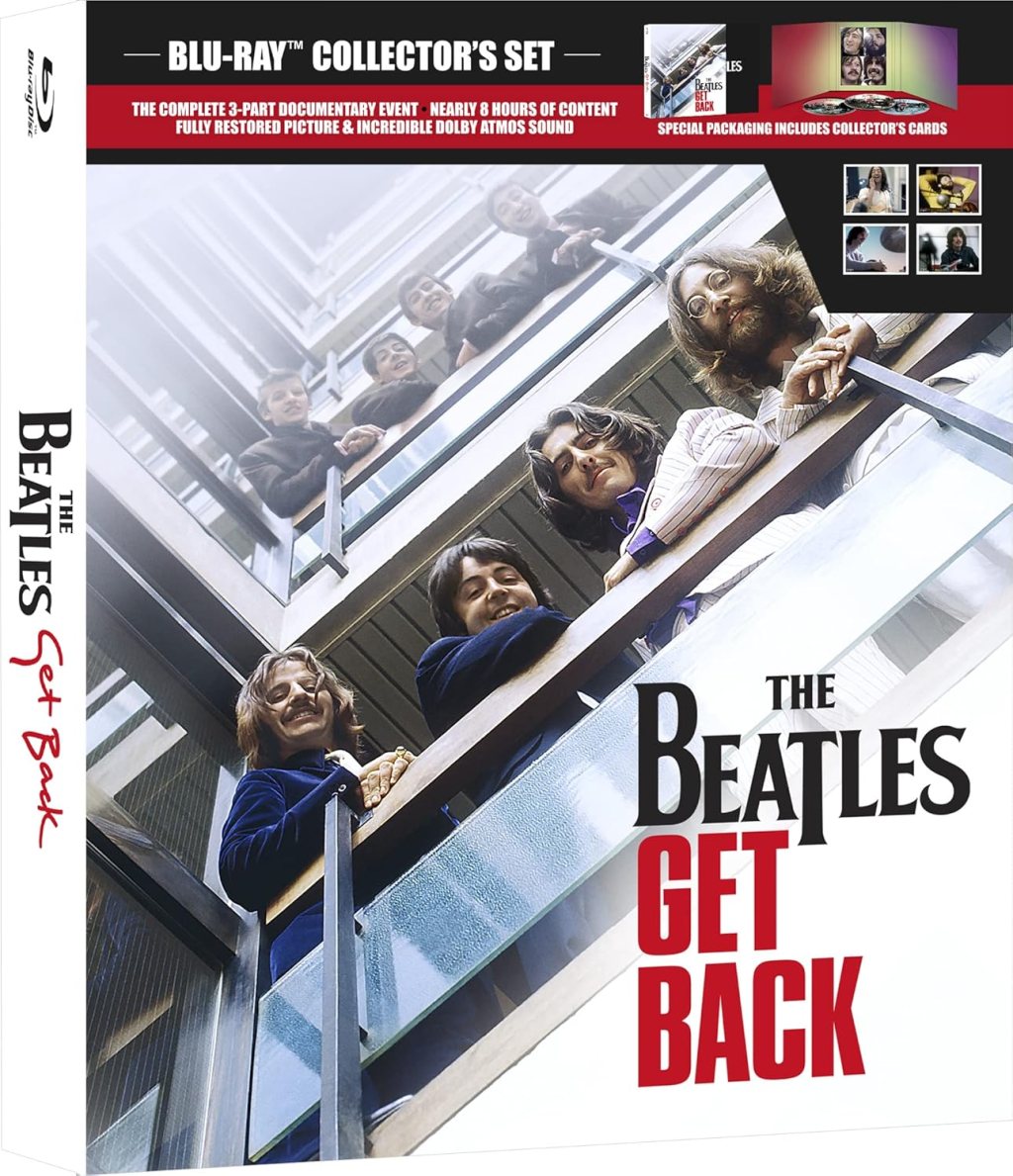
In January 1969, the Beatles began what became known as the Get Back sessions, one of the most chaotic and revealing periods of their career. Originally conceived as a return to live recording after abandoning touring in 1966, the project was meant to strip away studio excess and capture the band playing together again in real time.
Instead, the sessions exposed fractures that had been growing for years. George Harrison temporarily left the group after feeling increasingly neglected by John Lennon and Paul McCartney, while rehearsals often drifted between brilliance, boredom, improvisation, and emotional tension.
The material eventually evolved into Let It Be (1970), heavily reworked and produced by Phil Spector. Yet the released album only offers a partial glimpse of what the project truly was. Under the supervision of George Martin and engineer Glyn Johns, hundreds of hours of rehearsals, jams, unfinished songs, arguments, and spontaneous moments were captured on the famous Nagra tapes.
For decades, fans imagined alternate versions of the lost Get Back album. Most reconstructions focused on creating a polished Beatles record, but often lacked a deeper structural identity.
My version approaches Get Back differently.
Rather than presenting a conventional album, it becomes a triple LP documentary: a fractured musical diary moving between rock and roll roots, surreal improvisation, spiritual exhaustion, humor, avant-garde experimentation, and moments of extraordinary beauty.
It is not merely a collection of songs. It is the sound of the Beatles dissolving and reinventing themselves in real time.
Disc One
The collapse of nostalgia
Get Back
The manifesto of the project. Raw, sarcastic, rhythmic, and alive. The Beatles attempt to reconnect with direct rock and roll energy while unconsciously documenting their own inability to truly “get back” to the past.
Love Me Do ’69
A ghostly self-parody. The innocence of 1962 reappears in a heavier, ironic form. Nostalgia already sounds damaged.
Besame Mucho ’69
Half tribute, half exhausted cabaret. The Beatles revisit their pre-fame repertoire like aging musicians remembering another life.
One After 909
One of the few moments where the original concept genuinely succeeds. Pure live energy, railway rhythm, and camaraderie.
Rocker
Loose and chaotic rock and roll fragments functioning almost like a rehearsal-room hallucination.
Madman
A dark, unfinished Lennon sketch. The atmosphere anticipates the psychological nakedness of Plastic Ono Band.
Watching Rainbows
Hypnotic and surreal. Lennon’s fragmented lyrics and obsessive rhythm create a proto-krautrock atmosphere years ahead of its time.
Old Brown Shoe
George Harrison enters with elegance and complexity. A reminder that by 1969 he had become a songwriter equal to Lennon and McCartney.
Commonwealth Jam (Commonwealth/Get Off)
Political satire dissolves into absurdity. The Beatles transform a rehearsal into avant-garde social commentary, exposing both the humor and fragmentation of the sessions.
Dig It (Long Version 2021)
Not merely a joke track anymore, but a psychedelic drift through random thought, repetition, nonsense, and musical entropy.
Disc Two
Beauty emerging from exhaustion
Two of Us
Warm acoustic intimacy masking emotional distance. The Beatles briefly rediscover human tenderness.
For You Blue
Relaxed blues simplicity from Harrison, offering one of the few emotionally peaceful moments on the album.
Maggie Mae
Liverpool pub humor reduced to a miniature. A fragment of working-class memory preserved on tape.
Hot As Sun
McCartney’s unfinished melodic imagination wandering freely through instrumental sunlight.
Dig a Pony
Lennon’s surrealism collides with aggressive live performance. One of the rawest rooftop-era recordings.
Don’t Let Me Down (Raw Version 8.17)
Perhaps the emotional core of the entire project. Lennon abandons irony and exposes desperation directly.
I’ve Got A Feeling
Two incomplete songs fused together like the Beatles themselves: fragmented but still powerful when united.
Across the Universe (Psych Version 7.008)
Dreamlike and floating. This version feels less cosmic serenity and more exhausted transcendence.
Adagio for Strings
An unexpected interruption. Almost functioning as a funeral march for the Beatles themselves.
The Long and Winding Road (27.23)
Before orchestral overdubs, the song feels fragile and intimate, emphasizing resignation rather than grandeur.
Let It Be
The spiritual climax. McCartney transforms chaos into prayer.
The Palace of the King of the Birds
Mysterious instrumental minimalism. The Beatles unknowingly approach ambient music.
Disc Three
Disintegration and transcendence
Geh Raus
Chaotic, aggressive, absurd. The sound of tension mutating into experimental theater.
I Should Like to Live Up a Tree
Surreal English nonsense masking emotional fatigue and alienation.
Improvisation 27.32
A drifting abstract jam where structure disappears entirely.
Get Back II (The Beatles’ 1981 Black Album Version)
A brilliant conceptual choice. The return of Get Back as something darker and posthumous, almost imagining an alternate future where the Beatles survived into the new wave era.
Zero Is Just Another Number
A garage-rock improvisation
My Imagination
Built around one chord borrowed by Watch Your Step, the same used in I feel fine. The Beatles sound suspended between exhaustion and possibility. It looks like a homage to the Velvet Underground
A Quick One While He’s Away (Yoko Ono Feedback Jam)
The final collapse of form. Noise, tension, avant-garde provocation, and emotional confrontation. A fitting ending because the Beatles no longer conclude with harmony, but with dissolution.
This version feels closer to: The White Album as fragmentation, The Beach Boys’ Smile as myth and even albums like Tago Mago by the German band Can.
The strongest artistic decision is ending with the Yoko feedback jam instead of closure. That makes the album feel historically honest.
 Marco Di Caprio
Leave a comment