Patrick, Mario, Jerry, and Alicia were in the main hall of the archaeological center, the wooden shutters half-closed against the violent light pouring in from outside. The building creaked softly in the heat, as if it too were listening.
One wall was covered with maps. Photographs of the moai leaned against the metal filing cabinets. A layer of volcanic dust clung to their boots and trousers. The air carried a faint smell of paper and earth.
Jerry stood near the long central table, his arms folded with an almost rigid calm. His hand did not tremble. His strictly scheduled bodyweight workouts were his inner peace. Beside him, on the table, was a crate.
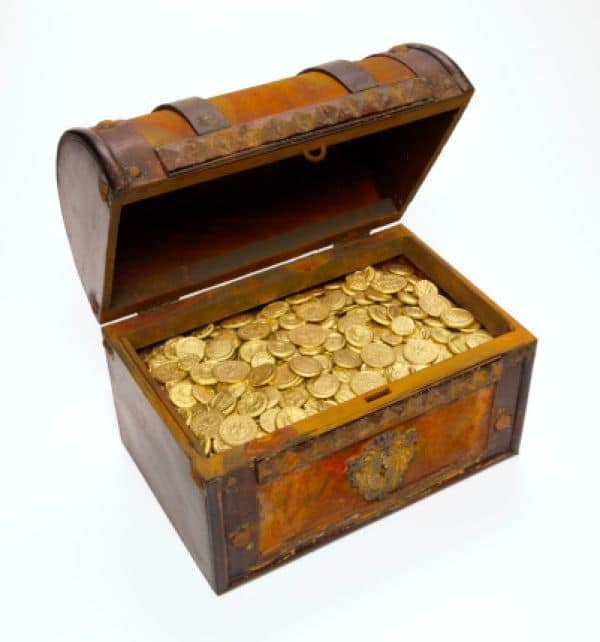
It had been unearthed near Anakena Beach, half-buried in the sand and among the roots. Inside were ritual objects. Carved wood. Beads. Fragments of cloth stiffened by salt and time. Nothing extraordinary.
But underneath, wrapped in faded fibers, there was a clay tablet. Rongorongo writing.
Mario felt a strange tightness in his chest every time he looked at it. Not fear. Not excitement. It was closer to recognition. As if that object belonged not only to history, but also to a question he had been carrying within himself long before arriving on the island.
Alicia leaned against the table, her arms crossed.
“So,” she said ironically, throwing him a glance, “is it enough to make Mario rich and famous?”
Her tone teased him lightly, but her eyes lingered on him a moment longer than necessary.
Mario ignored the provocation.
“The inscriptions,” he said, turning toward Patrick, “what do they really say?”
Patrick had remained silent for several minutes, seated with the tablet before him, his glasses lowered on his nose. He never rushed a translation. First he absorbed the structure. The rhythm. The syntax. The symbolic clusters. In moments like that he seemed older. Rooted. Almost monastic.
The room went still. Jerry did not move, but his gaze grew slightly sharper.
Patrick lifted a thin sheet of paper with his transcription.
“To give the language its proper tone,” he said softly, “I have rendered it in archaic English.”
Mario took a step forward.
The heat outside suddenly seemed irrelevant. A faded sheet. A translation into archaic language that carried something of the original rhythm.
Dear friend, behold the treasure of Hotu Matua,
A relic held in ancient earthly fame;
It shineth fair before the eyes of men,
Yet beareth not the light of Heaven’s flame.It glistereth bright as jewels in the sun,
And draweth hearts with glittering show;
Yet vain the glory it hath won,
For dust shall claim its praise below.But lo, the Mystery holdeth living fire,
Ordained of God Most High above;
No mortal crown nor proud desire
May seize such power decreed in love.The peasant soul would grasp the spark,
Yet knoweth not what light doth hide;
Therefore it resteth in the dark,
From hasty hand and untaught pride.Touch not the chest for outward gleam,
Nor trust the splendor of its face;
For truth is deeper than it seem,
And dwelleth in a secret place.Break thou the board that lieth beneath,
Where silence long hath made its abode;
There in the depth that sleepeth underneath
Shall rise the whisper of the Word.
Patrick slowly lowered the sheet of paper. The room seemed smaller.
“It was written, perhaps, by an island aristocrat a few centuries ago. The poem unfolds in three movements,” he said, removing his glasses. “Like a hymn. First, the Treasure. Then, the Mystery. Then a warning to the greedy, those who desire wealth. And finally, a clue.”
“So the treasure belongs to Hotu Matua,” Mario said enthusiastically.
Patrick nodded.
“According to tradition, Hotu Matua dreamed of a strip of land in the middle of the ocean. He left the Marquesas Islands in Polynesia with his clan and sailed for months. When he arrived here, he recognized the land from his vision.”
Alicia leaned against the table.
“The founding myth,” she murmured.
Jerry remained silent, but his eyes stayed fixed on the crate.
Patrick continued, calmer now, almost in the tone of a lecture but without vanity.
“Modern genetic analyses suggest that the legend may not be entirely mythical. Studies of mitochondrial DNA trace a common line of descent between the Polynesians and the islanders.”
Then Patrick tapped lightly on the page.
“The text clearly distinguishes the Treasure from the Mystery. The Treasure is visible. Material. Impressive. But not divine. The Mystery, on the other hand, is described as power and light.”
“They’re talking about God,” Alicia insisted. “As if they were monotheists.”
“Correct. Although the idea of God entered their beliefs,” Patrick replied, “their religion was centered on ancestor worship. The moai embodied mana, the spiritual force of the dead watching over the living.”
Mario stared at the clay tablet.
Alicia crossed her arms.
“And the uneducated who seek to seize riches?”
Patrick’s expression darkened.
“It most likely refers to the conflict between the Long Ears and the Short Ears.”
Mario exhaled slowly. He knew the story.
The Long Ears were aristocrats and priests. Guardians of ritual. Supervisors of the moai. The Short Ears were laborers forced to carve and transport the statues from Rano Raraku to the platforms. Excessive exploitation. Deforestation. Scarcity. Then rebellion.
“One version says the Short Ears revolted,” Patrick continued. “They captured the aristocrats and eliminated them. Some accounts even speak of cannibalism.”
“Another version,” Alicia added quietly, “claims that the Long Ears had first planned to exterminate the Short Ears. The plan failed.”
Jerry nodded.
“Civil war. Environmental collapse. By the time the Chileans colonized Rapa Nui, the island was already broken.”
Silence followed.
Patrick lifted the tablet again, then lowered the sheet of paper.
“It’s Rongorongo,” he said quietly. “Not a common language. A priestly script. Only the elite could read it.”
Alicia raised an eyebrow.
“So the warning against the uneducated who want to seize power…”
“Yes,” Patrick interrupted. “Literacy was power. The Long Ears controlled ritual, interpretation, and access to what they called the Mystery. The Short Ears worked. They carved the moai. But they did not read.”
Mario’s gaze returned to the chest.
“And the final instruction,” he said. “To search for a voice inside the chest?”
Alicia stepped forward.
“It refers to a clue,” she said. “Perhaps another tablet. If there’s a false bottom in the chest, it will be fragile.”
Jerry crouched slightly, examining the base. His hand trembled faintly.
The chest was older than it had first appeared. The upper compartment contained ritual objects of modest value. But the wood at the bottom seemed thicker. Reinforced. Sealed deliberately.
Patrick clasped his hands behind his back.
“We won’t break anything.”
The decision was immediate. Firm.
“First we establish the context, then we grasp the meaning better. We consult the oral tradition. An old sage on Mount Poike has helped me many times. He will certainly know more than I do.”
 Marco Di Caprio
Leave a comment