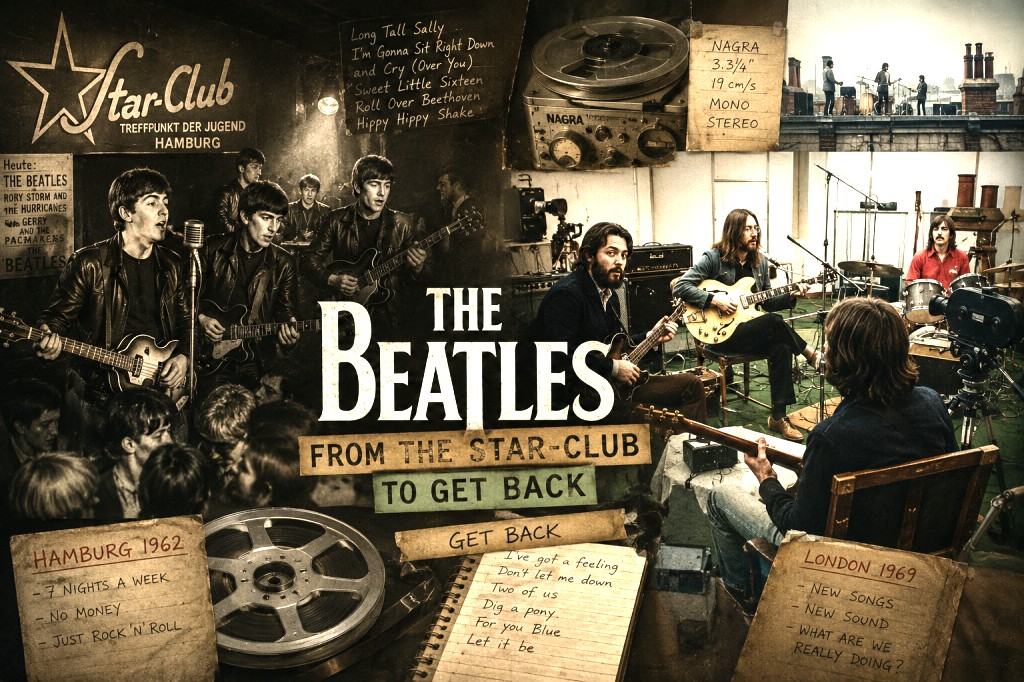
Many people say that from 1963 to 1969 the Beatles made a huge leap toward innovation. This is true, but they often forget that before Please Please Me (1963) and Abbey Road (1969), there were two seminal works.
The Beatles at the Star Club in Hamburg (December 1962) shows how the band used to play what John Lennon once called the best rock ‘n’ roll: raw, aggressive music that now sounds almost proto-punk. The guitars were heavy, and Lennon’s rhythm guitar was especially impressive. Purely by chance, we have a recording of The Beatles – Live at the Star Club. The performances in Hamburg were captured on a home tape machine using a single microphone, resulting in very low-fidelity recordings. Later, a sound engineer polished them slightly, and the live album was released by two small labels, Lingasong and Bellaphon.
The Beatles tried for years to stop its release, until 1988, when the Beatles’ estate was finally able to acquire the rights. To this day, there has never been an official release, probably because of the poor sound quality. However, many fans on the internet have attempted to restore and improve the recordings, bringing the album surprisingly close to an official-quality release.

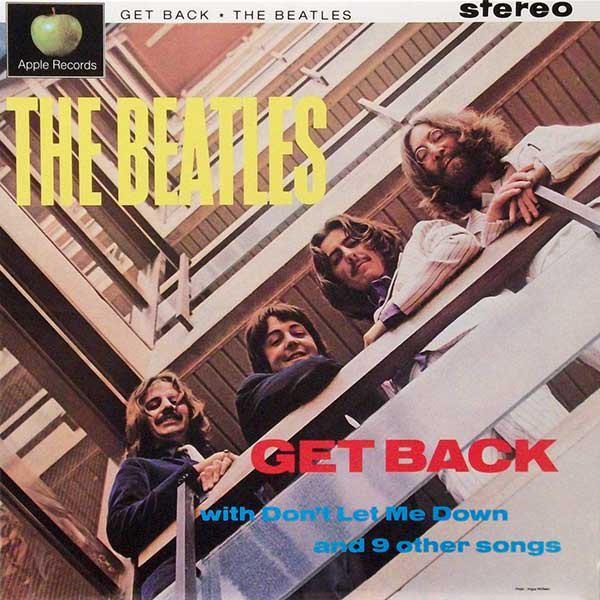
As for the Get Back sessions (1969), which marked the last time the band truly played together, the sound, captured on low-fidelity Nagra tapes, has since been polished by both Peter Jackson and many dedicated fans. However, even though the sound was better than the recordings captured in Hamburg, the surviving members were unable, or perhaps unwilling, to officially release many fascinating songs and jams from those sessions, such as “Commonwealth/Get Off” (Jam), “Watching Rainbows,” “My Imagination,” “Madman,” and many other hidden gems that are fortunately available online in restored form. The Beatles estate, especially with the disappointing Anthology 4 selection, seemed to show little interest in polishing and presenting many of these overlooked recordings.
Both Hamburg 1962, with its proto-punk energy, and the Get Back Sessions, with their sonic experimentation, may never receive the full official treatment they deserve. Yet thanks to the internet, fans have restored and reprocessed these recordings. And that is a blessing. Because both Hamburg 1962 and the Get Back Sessions of 1969 express something rare: total freedom.
Marco Di Caprio
 Marco Di Caprio
Leave a comment