Portfolio
A visual archive of covers and creative projects.
Cultural Research
Marco Di Caprio has always been deeply engaged in cultural research, a vocation rooted in his humanistic education and enduring interest in the relationship between literature, music, and emotional consciousness. His principal fields of study are popular music and medieval lyric poetry, which he approaches through an interdisciplinary perspective that combines philology, symbolism, aesthetics, and cultural history.
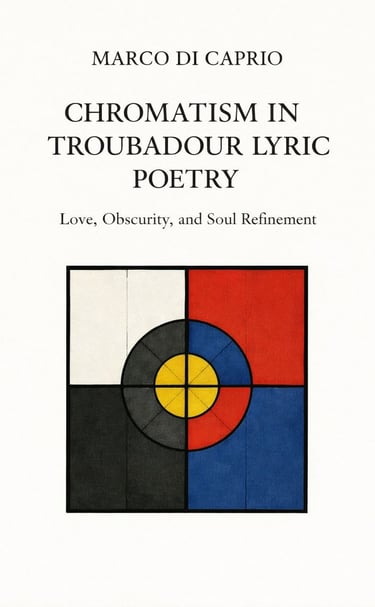
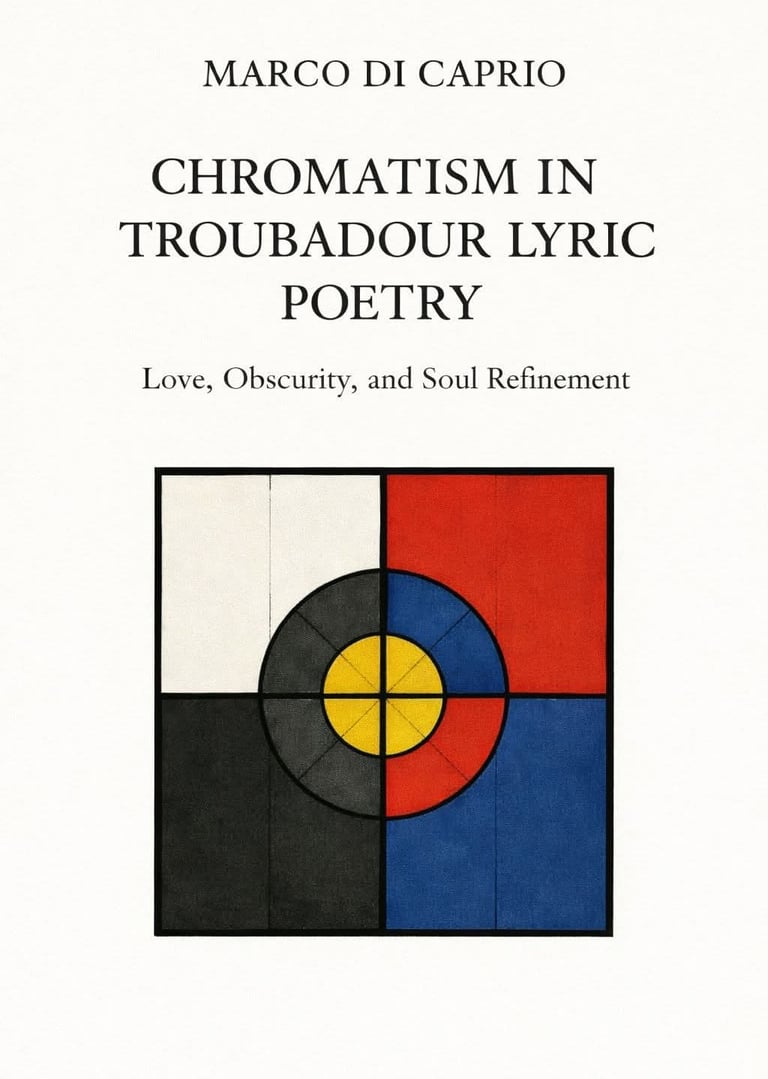
A central dimension of his scholarly work is the study of chromatism in Troubadour lyric poetry. In his academic book Chromatism in Troubadour Lyric Poetry – Love, Obscurity, and Soul Refinement, Di Caprio proposes an original interpretation of light, darkness, and color in the poetry of the troubadours—the singer-songwriters of southern France in the twelfth century. Rather than treating chromatic imagery as merely decorative, he interprets it as a symbolic and spiritual language expressing the inner dynamics of Love: desire, obsession, pain, longing, healing and transcendence.
Through close readings of major troubadour poets, his research shows how chromatic symbolism reflects a psychological and moral journey in which courtly love becomes a path of soul refinement and metaphysical elevation. By situating medieval lyric within a broader continuum that connects poetry, music, and emotional perception, Di Caprio offers a renewed understanding of troubadour poetics and demonstrates their continuing relevance for modern reflections on love, artistic expression, and human consciousness.
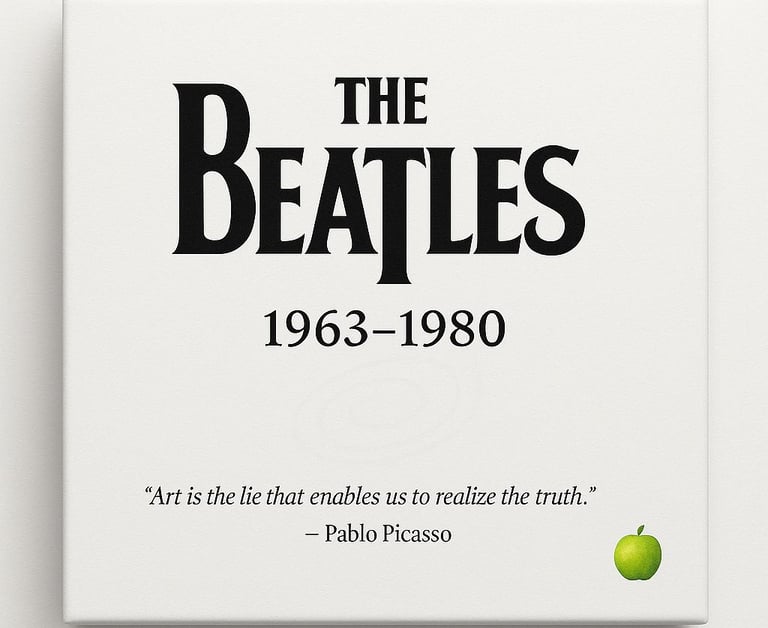
Another important area of his cultural research concerns the British rock band The Beatles. Di Caprio has developed an extensive alternate discography imagining that the group never disbanded in 1970 and extending their creative trajectory until 1980, the year of John Lennon’s death. Constructed from the solo works of the four members and re-conceived as collective albums, this project explores how the band might have achieved an even greater artistic and cultural influence had they remained united until the end of the decade.
He is also planning a critical study titled The Beatles and Love Desire – From Love Me Do to I Want You (She's So Heavy), intended to trace the musical and emotional evolution of the band’s songwriting. In this work, Di Caprio argues that the Beatles’ lasting importance lies not only in technical musical innovation but in their capacity to expand the horizons of emotional and inner consciousness through concise and universally resonant song forms.
A further strand of his research is dedicated to the British singer-songwriter Robbie Williams. Often underestimated as merely an entertainer, Williams is reconsidered by Di Caprio through an alternative discographic reconstruction based on hidden or marginal material—particularly B-sides—revealing a deeper artistic coherence and suggesting that a different curatorial approach to his albums might have led to a broader critical recognition of his cultural significance.
Across these diverse fields, Marco Di Caprio’s work is united by a single guiding intuition: that poetry and music function as symbolic languages of the inner life, capable of revealing connections between aesthetic beauty, emotional experience, and spiritual meaning. His research therefore seeks not only to interpret cultural works but also to illuminate the ways in which art refines perception, deepens consciousness, and gives enduring form to human desire.
Creative Projects
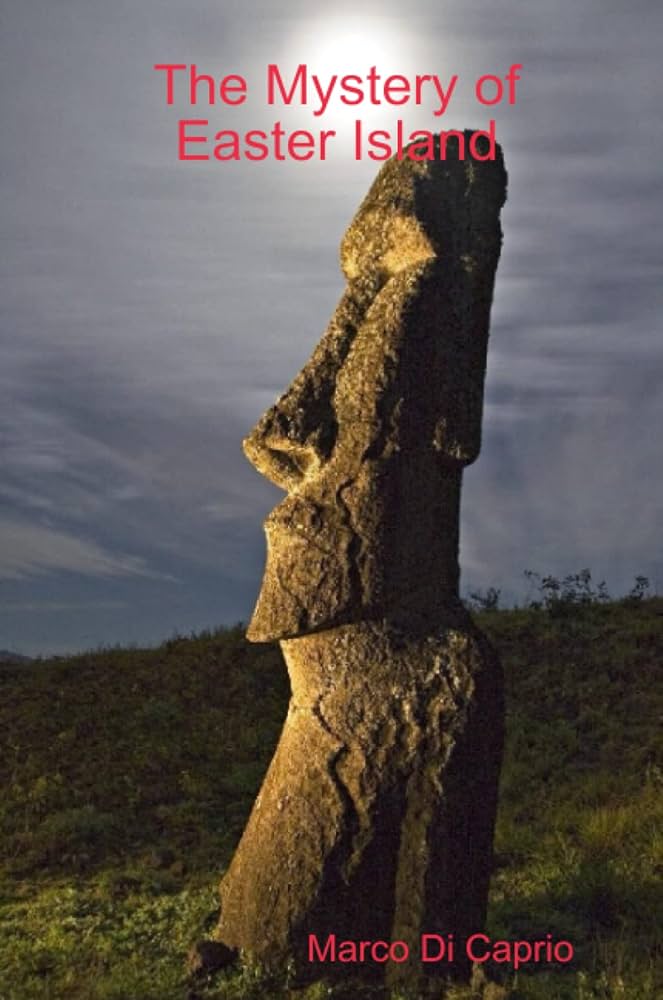
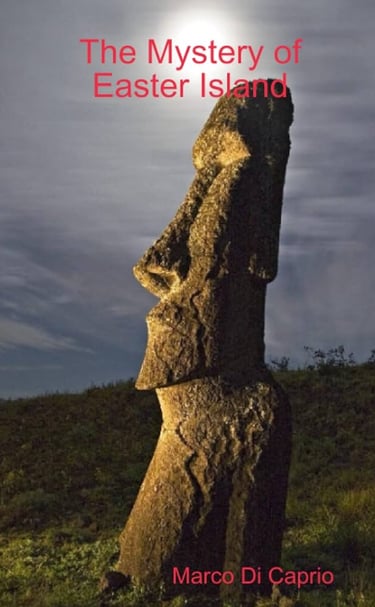
Marco published his novel The Mystery of Easter Island in 2008 and is currently preparing a new edition set during the Cold War year of 1969. The story unfolds around a group of archaeologists who, after many years of research on the island, attempt to uncover what the natives simply call “the Mystery”: a sacred object whose meaning is known only to the ancient guardians of the island and which they seek to protect from the outside world.
The central protagonists—young researchers Mario and Alicia —are guided by Patrick, a scholar of Polynesian languages whose knowledge opens the first path toward understanding the island’s hidden past. Their search leads them to an aged sage, Ariki, custodian of ancestral memory, who reveals that mysterious wooden tablets contain encoded clues pointing to the location of the sacred object. As fragments of truth slowly emerge, the archaeological quest becomes inseparable from a deeper spiritual and historical enigma.
At the same time, global political tensions intrude upon the island’s fragile balance. The administration of President Nixon pressures the Chilean authorities—then sovereign over Easter Island—to relinquish control to an ostensibly independent government led by the ambiguous businessman Sergio Rapu and covertly financed from abroad. Behind this maneuver lies a dark and secret design whose consequences threaten not only the island’s autonomy but the destiny of the sacred object itself.
In response, the native population—guided by King Hotukau and secretly supported by the Soviet Union—organizes a guerrilla resistance that places the newly formed regime in immediate danger. Thus the island becomes a symbolic crossroads where archaeology, spirituality, and Cold War geopolitics converge.
As the investigators draw ever closer to the hidden truth, shadowy forces begin to move against them, determined to seize the sacred object for their own purposes. What follows is a long and tortuous journey marked by deception, peril, and unexpected revelations, in which the search for an ancient relic gradually transforms into a confrontation with power, history, and the limits of human knowledge.
In this way, The Mystery of Easter Island blends adventure narrative, historical imagination, and metaphysical inquiry, presenting the island not merely as a geographical setting but as a symbolic space where memory, secrecy, and transcendence intersect.
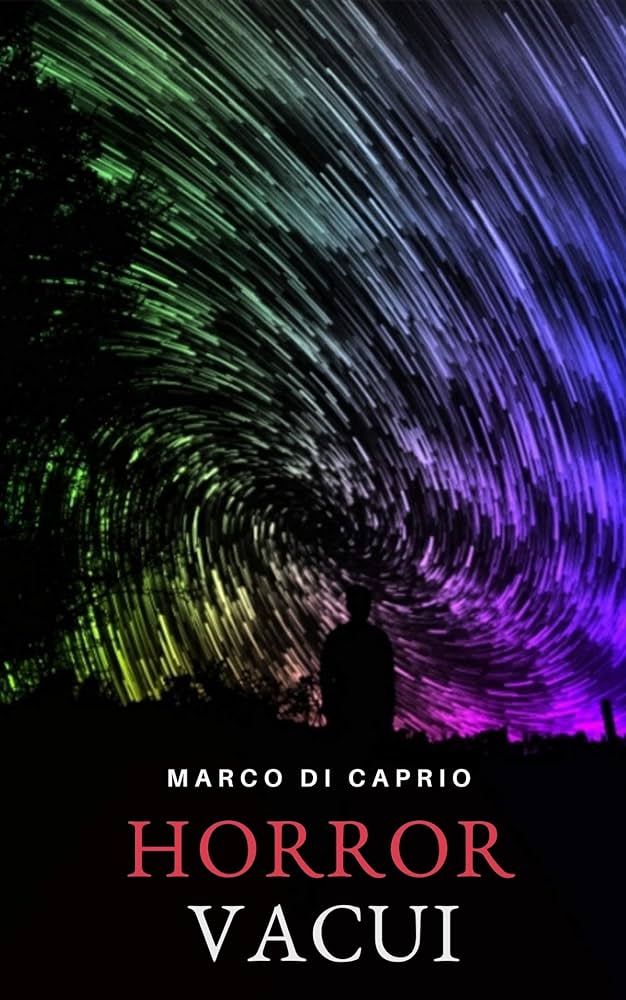
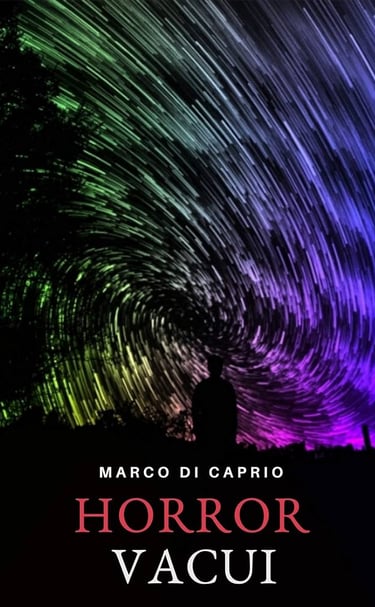
On the other hand, Horror Vacui represents one of the most intimate and psychologically revealing dimensions of Marco Di Caprio’s creative work. Written in Italian as a collection of short prose texts, the book explores the emotional landscape of the contemporary individual confronted with loneliness, technological alienation, sensory overload, grief, and spiritual disorientation. Rather than following conventional narrative structures, the pieces unfold as interior visions—fragmented, symbolic, and often dreamlike—where memory, desire, and anxiety merge within a space suspended between reality and hallucination.
At the center of the collection stands the ancient concept of horror vacui, the fear of emptiness, reinterpreted as a modern existential condition: the dread of silence, the impossibility of stillness, and the restless search for meaning in a world saturated with images and noise. Di Caprio transforms this void into a site of spiritual tension, where suffering becomes inseparable from the longing for transcendence and for the hidden presence of God. His prose frequently oscillates between darkness and illumination, echoing the chromatic symbolism that also informs his scholarly research on medieval lyric poetry, and revealing a continuous dialogue between despair and redemption, fragmentation and unity.
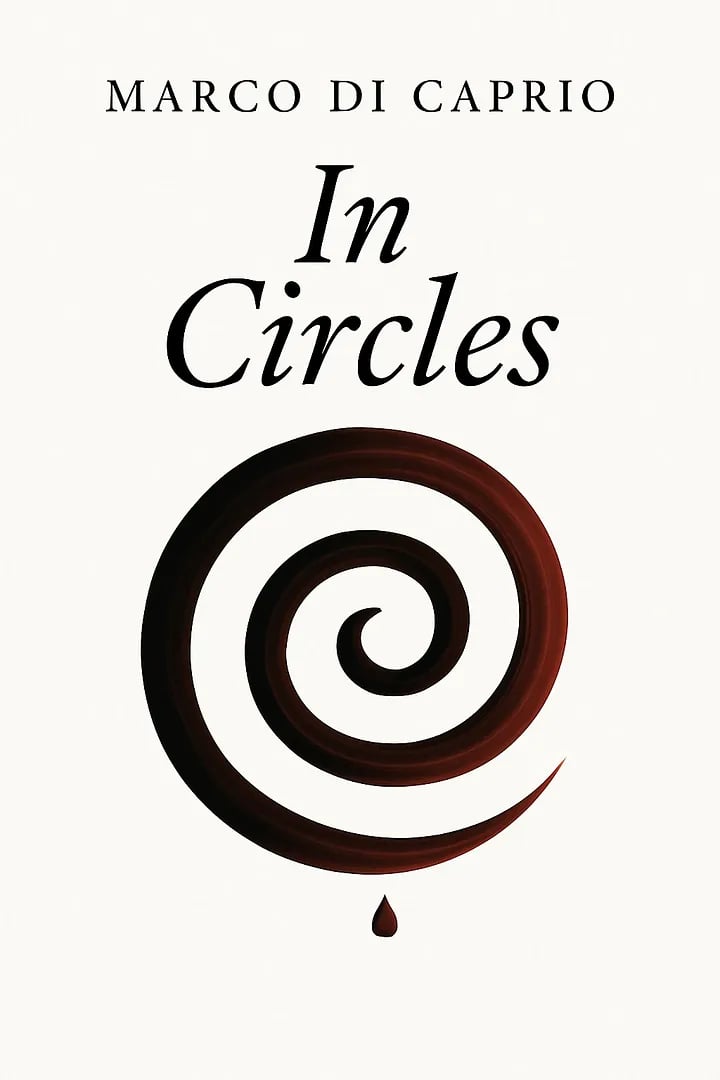
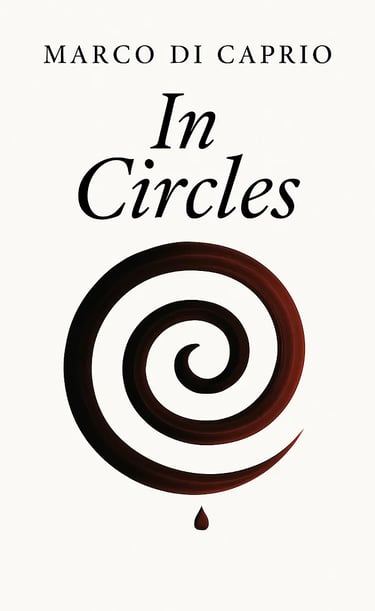
In Circles emerges as the English translation and expansion of Horror Vacui, extending its themes through a broader reflective structure and a more explicitly meditative rhythm. While preserving the emotional intensity of the original Italian texts, this new work deepens the exploration of cyclical time, repetition, and return as metaphors for psychological healing and spiritual reorientation. In this sense, In Circles does not merely reproduce the earlier book but reopens it, transforming personal fragmentation into a movement toward coherence, silence, and inner reconciliation.
Together, Horror Vacui and In Circles form a unified literary project situated at the crossroads of literature, philosophy, and musical sensibility—an attempt to give language to the invisible movements of the soul in the modern age and to trace, within contemporary emptiness, the possibility of meaning, grace, and renewal.